
Halamid
As experts in unique chemistry, we have developed a diverse portfolio of technologies designed to meet the evolving needs of our customers across multiple markets. Our innovative solutions are built on deep scientific expertise and a commitment to performance, quality, and sustainability.
We serve four main markets:
Disinfection: Biosecurity solutions ensuring the highest hygiene standards wherever protection is required.
Smart Coatings: Advanced nanotechnologies and sol-gel systems that help customers overcome key challenges and create surfaces with enhanced functionalities.
Additives: A comprehensive range of REACH-registered sulfonamides widely used in the cosmetics and laminates industries.
Fine Chemicals: High-quality raw materials primarily serving the pharmaceutical sector.
Titre H2
Bandeau de valorisation de chiffres clés ou informations importantes
Additives
 Halamid12 June 2024
Halamid® effective against severe ectoparasites in Brazilian farmed fish
Halamid® is an effective way to control important ectoparasites in farmed arapaima fish, as shown by independent research…

Quality & regulatory

Smart coating
Our highly specialized team focuses on nanotechnology to protect and functionalize surfaces such as glass, metal, plastics, and mineral substrates. Nanotechnology-based coating materials enable the development of smart coatings that impart specific functionalities across multiple sectors, including Automotive, Aviation, Architecture, Glass Care, OEM, and Yacht Care.

PTSA
Photovoltaic Self-Cleaning Lorem ipsum dolor sit amet, consetetur sadipscing elitr, sed diam nonumy eirmod tempor invidunt ut labore et dolore magna aliquyam erat, sed diam voluptua. At vero eos et accusam et justo duo dolores et ea rebum. Stet clita kasd gubergren, no sea takimata sanctus est Lorem ipsum dolor sit amet. Lorem ipsum dolor sit amet, consetetur sadipscing elitr, sed diam nonumy eirmod tempor invidunt ut labore et dolore magna aliquyam erat, sed diam voluptua.
PTSAcid
Photovoltaic Self-Cleaning Lorem ipsum dolor sit amet, consetetur sadipscing elitr, sed diam nonumy eirmod tempor invidunt ut labore et dolore magna aliquyam erat, sed diam voluptua. At vero eos et accusam et justo duo dolores et ea rebum. Stet clita kasd gubergren, no sea takimata sanctus est Lorem ipsum dolor sit amet. Lorem ipsum dolor sit amet, consetetur sadipscing elitr, sed diam nonumy eirmod tempor invidunt ut labore et dolore magna aliquyam erat, sed diam voluptua.
PTSC
Photovoltaic Self-Cleaning Lorem ipsum dolor sit amet, consetetur sadipscing elitr, sed diam nonumy eirmod tempor invidunt ut labore et dolore magna aliquyam erat, sed diam voluptua. At vero eos et accusam et justo duo dolores et ea rebum. Stet clita kasd gubergren, no sea takimata sanctus est Lorem ipsum dolor sit amet. Lorem ipsum dolor sit amet, consetetur sadipscing elitr, sed diam nonumy eirmod tempor invidunt ut labore et dolore magna aliquyam erat, sed diam voluptua.
Disinfection
Aquaculture
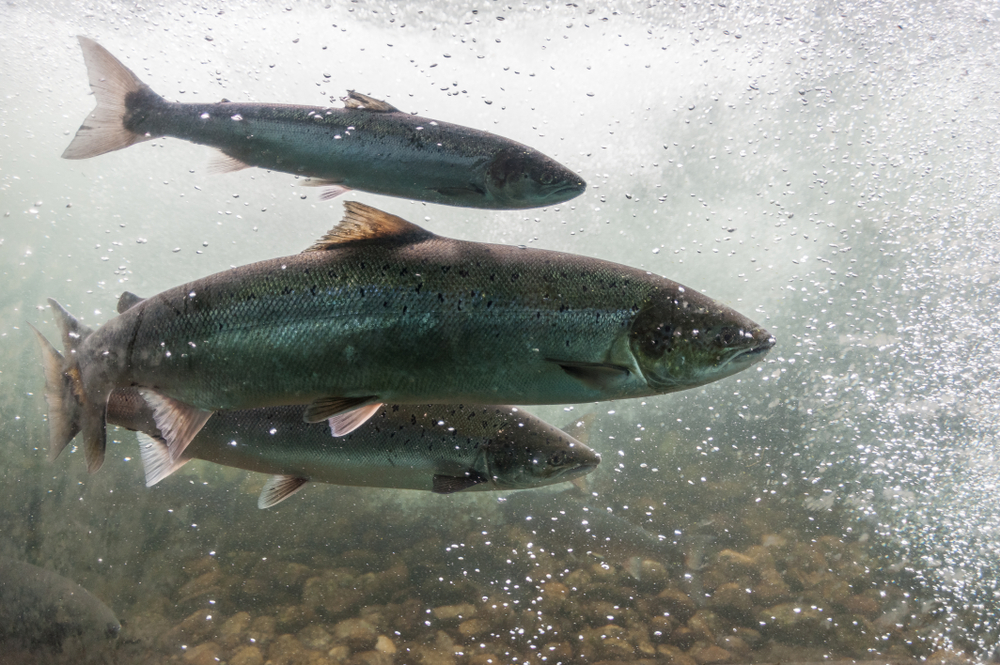
Halamid® has been a trusted and effective disinfectant in aquaculture for many years, valued for its proven efficacy and low toxicity to fish, shrimp, and aquatic environments. It is suitable for use in saltwater, brackish, and freshwater conditions.
Shrimp Farming
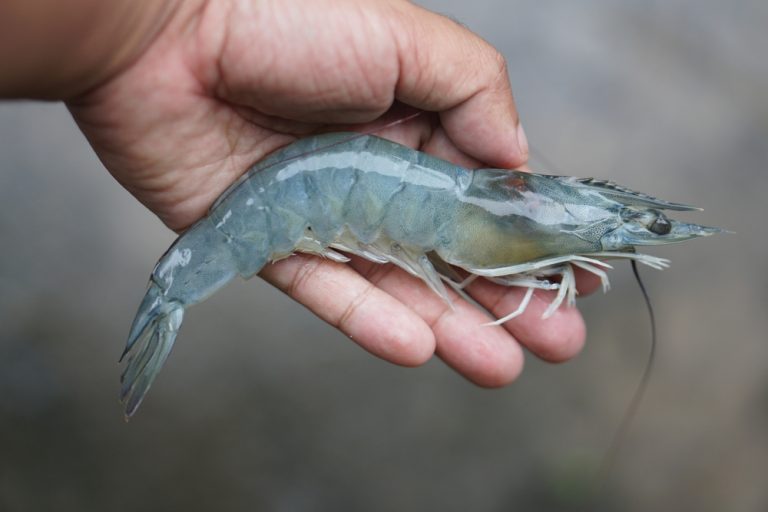
In shrimp ponds and culture systems, HALAMID® is applied directly to the water for both routine hygiene management and disease outbreak control. It is effective against major shrimp pathogens such as Vibrio species, White Spot Syndrome Virus, and other bacterial and viral challenges.

Poultry
Biosecurity is key in farms and veterinary hygiene, all along the ‘farm to fork’ chain and starts by effective disinfection. Halamid® has been developed from the starting point of a strong killing effect and by greatly improving aspects such as stability is solution, corrosiveness and safety compared to more hazardous products.

Livestock
Halamid® is proven powerful yet mild disinfectant ideally suited to be used by poultry farmers in broiler houses, hatcheries and layer farms. Halamid® is notified under the EU BPR regulation and UK DEFRA approved among many other registrations around the world.

Healthcare & Industry
Halamid® is a broad-spectrum disinfectant effective against all major microorganisms. Widely used in food processing, drinking water systems, hospitals, and industrial facilities, it combines strong antimicrobial performance with excellent material compatibility. Easy to dissolve in water and gentle on surfaces, metals, and plastics, Halamid® meets the highest hygiene standards across diverse applications.
Everything you need to know about Axcentive
Halamid® is registered for Veterinary applications in Hungary
The green light was received recently by the Hungarian authorities.
Halamid® is approved as highly effective broad spectrum bactericide, virucide and fungicide for poultry & livestock markets, when applied according to the instructions for use.
Halamid® will be available in Hungary through the company Bos-Plus, who took the initiative of introducing newly registered Halamid® at the 23rd Hungarian Great Plain Animal Husbandry and Agricultural days, NAPOK, which took place in April 2017.

Gergely TOTH, Managing Director of company Bos-Plus, who helped to get through the lengthy registration process in Hungary commented:
“Now that we have finally the approval from the Authorities, we have begun to inform actively farmers. Returns from the market are very positive and I am very confident about the future of Halamid® in Hungary”. Bos-Plus is already selling a wide range of products & equipment dedicated to poultry & livestock markets and has direct connections with end-users. The combination of Bos-Plus’ expertise and Halamid®’s unique formula, powerful yet mild, promises a great future for Halamid® in Hungary!
Halamid®, the powerful biocide against all major pathogens, is already approved in more than 100 countries around the world. Axcentive is determined to continue this process and to have approvals from all major poultry, livestock and aquaculture countries in the world and consequently work on new registration dossiers is ongoing.
Further information can be obtained from local Halamid distributors or axcentive.com/.
Meeting Halamid® customers in Asia
The Fair for Intensive Livestock Husbandry and Aquaculture, the VIV ASIA Bangkok is a recurring event, where all internationally oriented livestock and aquaculture players come together. Halamid® is always present at this international fair in order to meet existing and new distributors of a wide variety of countries, not necessarily limited to Asia.
 Halamid® is one of relatively few products that is being marketed in both livestock disinfection and aquaculture farming. These markets may not have a lot in common, but poultry growers and shrimp and fish farmers know the way to our stand and Arno Schut, the Technical Marketing Manager at Axcentive comments:
 “Yes, it has been very busy ! Sam (Sam Ng, Axcentive Asia – red) and I have been talking with very interested people from all over these industries, who would like to solve their hygiene problems or those of their customers with Halamid®. Even if conditions of use with shrimp may be very different from a terminal disinfection in a poultry farm, the characteristics of Halamid® that make the difference remain the same: strong effectiveness and mild properties combined in one product.”

 In July 2017 Halamid® was represented at the Asia Pacific Aquaculture 2017 (APA17) in Kuala Lumpur. Aquaculture in Asia is big business and consequently also for Halamid® aquaculture is a main focal point. APA17 is a show with an excellent conference attracting highly skilled people from aquaculture research and industry. Management of shrimp and fish farms, very big and small, visited the booth, telling us they had heard of Halamid®. Often they showed interest in further trials.
Further information can be obtained from local Halamid distributors or axcentive.com/


 In July 2017 Halamid® was represented at the Asia Pacific Aquaculture 2017 (APA17) in Kuala Lumpur. Aquaculture in Asia is big business and consequently also for Halamid® aquaculture is a main focal point. APA17 is a show with an excellent conference attracting highly skilled people from aquaculture research and industry. Management of shrimp and fish farms, very big and small, visited the booth, telling us they had heard of Halamid®. Often they showed interest in further trials.
NEZUS, NEW DISTRIBUTOR IN THE PHILIPPINES
Nezus Philippines Corporation has been appointed as the Halamid® distributor in the Animal Hygiene sector in the Philippines. Recently also, the registration of Halamid® has been received from the local authorities. Nezus is ready to start selling the product as Halamid® is available for sale from their warehouses.
Cezar Policarpio, President of Nezus Philippines Corporation is glad to include Halamid® in its product range. Halamid® is a well-known brand name for a reliable disinfectant, used in animal houses. It has been somewhat lacking in active marketing in the Philippines and Nezus is going to change that!.
Nezus is approved by the Philippine Bureau of Animal Industry to sell disinfectants and soluble products for poultry and livestock. Senior management of Nezus has a long-lasting experience in the animal health markets. Our network will welcome Halamid® in the Philippines!
AXCENTIVE OPENS OFFICE IN SINGAPORE
 Axcentive is a globally operating company with customers spread over all continents. We achieve to be close to our customers by working with local agents or distributors and by having a sales team that is travelling to reach out to customers all over the world. Being close to our markets is key.
Our relation with Asia goes back a long time. Particularly Halamid has been present in the region for many decades and is consequently a well known brand in the region. Asia is also one of few regions with continuous growth and a distinct culture. These and other aspects have made Axcentive deciding to open a local office in Singapore.
Sales manager in this office is Shey Kuan Ng (Sam) who will shortly make acquaintance with all existing and potential customers in a territory stretching from India to Japan and from China to New Zealand.
Having the same directors as Axcentive France and technical/QHSE support still being provided from France, Axcentive have chosen for continuity of services.
Our unique Product Ownership approach, our service and reliability, product quality, delivery terms, payments terms and other conditions will not change. The difference is that a local sales manager and customer care department drive the business and listen to customer needs even better than before.
Further information on Axcentive can be obtained from www.axcentive.com , by emailing info@axcentive.com or by calling our sales office on +33 442 694 090 (France) or +65 6258 6338 (Singapore).
 Axcentive is a globally operating company with customers spread over all continents. We achieve to be close to our customers by working with local agents or distributors and by having a sales team that is travelling to reach out to customers all over the world. Being close to our markets is key.
HALAMID® AVAILABLE IN USER-FRIENDLY SACHETS
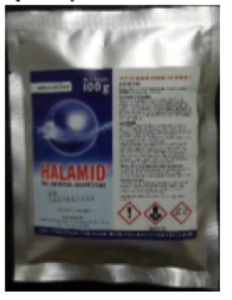
Effective against all major problematic microorganisms, Halamid® the universal disinfectant, already available in various pack sizes, such as 2 kg buckets, 5 kg buckets, 25 kg drums or bags, is now available in user-friendly sachets.

Speed, ease of use combined with cost effectiveness
The single unit dose, comprising of 100 gram Halamid® in powder form, minimises handling prior to dilution and supports correct manipulation by end-users, reducing the risk of dilution errors. A unit dose of 100 gram is also easy to carry with you and the appropriate quantity for smaller usages. The effective dilution rate of Halamid® allows nevertheless the treatment of large areas, since one sachet produces 10 litres of ready-for-use solution at a concentration of 1%, usually good for more than 30 m2. Highly soluble, the content of one sachet is ready for immediate usage after simple dissolution in water. An additional point sometimes forgotten, but important for small retail users, is the cost per unit; Halamid® sachets have lower unit cost than the other pack sizes.
Sachets: the ideal configuration as additional pack
This new pack size completes the existing offer of packing units available in the Halamid® range. Sachets are an ideal complementary pack for various applications such as the disinfection of tools, equipment, egg washers and drinking water. They are also particularly practical for foot baths.A premium appearance for premium quality
Their very professional aluminium appearance, attracts attention on the shelf, confirming the premium quality of the product. The 100 gram sachets are packed in 5 kg carton boxes. Each carton box comprises 50 sachets of 100 gram each. This great additional pack size is currently available upon request.Further information on Halamid® can be obtained from axcentive.com/, by emailing info@axcentive.com or by calling our sales office on +33 442 694 090.
AERIAL DISINFECTION OF HALAMID® PREVENTING TRANSMISSION OF AIRBORNE POULTRY DISEASE
The respiratory health of chickens in today’s closed poultry houses is affected by airborne pathogens. The main poultry diseases, such as Newcastle disease (ND), Salmonella and Avian Influenza are all transmitted by airborne (dust) particles. These pathogens are able to survive over limited periods of time and can travel distances of 500 m or more.
Knowing that you only need a few particles to infect an animal, airborne disease transmission is a serious threat for a flock within a poultry house. Also between poultry houses on a farm and more rarely between farms, such contamination can take place. It is also worth mentioning that airborne poultry pathogens have health implications for farm personnel.
It is clear that the first step limiting these risks is in making sure the empty poultry house is thoroughly disinfected (terminal disinfection) and populated with healthy chicks from a reliable and reputable hatchery.
The disinfectant Halamid® has proven its use in various disinfection protocols for empty houses (see our poultry brochure).
Aerial disinfection – Efficacy
Infection through a variety of vectors during the growing cycle is still possible. Aerial disinfection is one of few means to defend against this and safeguard animal health and farm profits. There are a number of reasons for doing it.- To kill airborne micro organisms and reduce the spread of pathogens
- To reduce inhalation of endotoxins produced by certain bacteria, present in the dust
- To reduce the amount of dust, carrier of micro organisms and endotoxins.
Halamid® is a unique powerful yet mild disinfectant, suitable also for use in the presence of birds. Dilute concentrations have a very good killing effect on notorious poultry pathogens.
Table 1: Effective concentrations, following European standardized norms
Pathogen Concentration Dilution Salmonella 0.3% 1:300 Avian Influenza 0.1% 1:1000 Newcastle disease 0.1% 1:1000 
Aerial disinfection is possible in all poultry related applications where airborne transmission of pathogens is a risk (broiler, hatchery, layer farm and so on).
Protocol – Easy to use
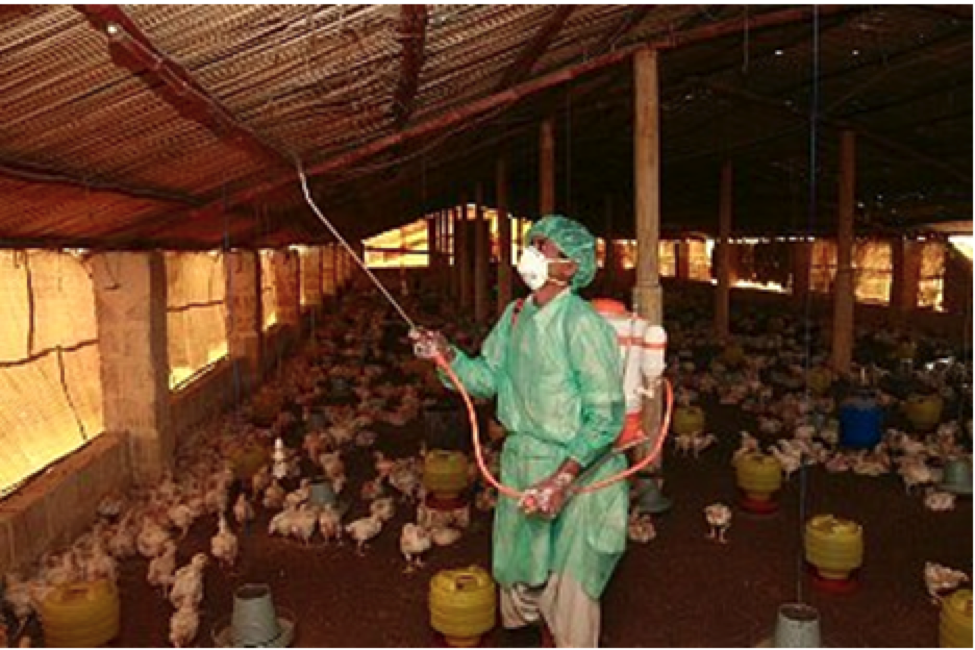
Application in the presence of birds calls for a fine mist to be sprayed into the air rather than directly onto surfaces. The finest mist setting of a portable high pressure washer can be used. For higher performance, use cold-fogging equipment or hydrofans is used. The emphasis is on killing pathogens in the air rather than wetting the building.
Concentration: 1:300 (routine) or 1:200 (risk) at 1 L per 10 – 20 m2 If dust and/or endotoxins are a serious problem, a coarser spray producing larger droplets can be a solution. The higher wetting capacity makes dust fall to the ground.
Concentration: 1:200 at 1 L per 10 – 20 m2 Please follow local regulations and registered claims as they may differ per country
Further information can be obtained from local Halamid distributors or axcentive.com/.
HALAMID ONCE AGAIN PROVEN EFFECTIVE AGAINST VIBRIO
That Halamid is effective against Vibrio was already known for some time from lab and small scale trials. A few ppm of Halamid gives a significant reduction of Vibrio in fresh and seawater.
Now, large scale monitored tests with Halamid in tropical marine fish farming in Indonesia have been extremely convincing in showing that the use of Halamid leads to low Vibrio levels also at commercial scale. These low Vibrio levels have been directly linked to lower mortality and/or better growth.
Mr. Tinggal Hermawan, Research Manager at Balai Perikanan Budidaya Laut Batam, Indonesia comments:
We have a large government owned test facility on Batam, an island close to Singapore, where we produce amongst others seed of Grouper, Silver Pompano and Barramundi. Our seed production is already quite good so when we were asked to test Halamid® we were curious to see if Halamid® could further improve on that. We tested Halamid® for about one year with different species on eggs, larvae and fingerling. The effect of a Halamid treatment was not immediately visible to the eye after application but Vibrio analysis showed a very significant reduction in Vibrio. The quality of the water medium improved and we measured that biomass (the survival rate and the size) improved remarkably.At the same time commercial trials in Thai shrimp farms have shown that, Halamid has a visible effect on water quality and what’s more it gives lower Vibrio levels.
Fish and shrimp farmers have learned from the past and no longer expect miracles from water treatment products. They are critical and will only use products offered by reputable distributors, making reasonable claims. With Halamid we have always been careful not to overstate its possible contribution. The latest results however make that we shake off some of that modesty, convinced as we are and with us our distributors and customers that Halamid does measurably contribute to the well-being of fish and shrimp.
Pichai Pitaktrapulsiri DVM, MD Kaset Center, Thailand:
Kaset Center has a limited product range and carry only products that really work for the farmers. We launched Halamid® on the Chantaburi Shrimp Expo this year where half our booth surface was dedicated to Halamid®. At this exhibition, the Thai farmers come in big numbers (much more than at the VIV) and we know them. There was definitely interest in a new serious product. After this successful expo we followed several farms. Farmers were enthusiastic about the effect of Halamid® they could measure. Particularly water colour and Vibrio levels were much improved. We are receiving repeat orders and that is the ultimate proof farms are ready to spend their money on Halamid®.Axcentive will continue to record field results and lab tests to optimize its use in practice. Obviously we will also bring this good news to other fish and shrimp farming countries, hoping to contribute to the profits and well-being of farmer and their crop.
Further information on Halamid® can be obtained from www.axcentive.com, by emailing info@axcentive.com or by calling our sales office on +33 442 694 090.
HALAMID REAFFIRMS VIRUCIDAL POWER
Newcastle disease (ND) is one of the main, global viral diseases affecting the poultry industry. It is a highly contagious disease and present in all kinds of farmed and wild birds. Due to its omnipresence in wild birds, the eradication of the disease is impossible and farm owners should always be aware of the possibility of infection.
Obviously good biosecurity is the key to growing chickens in an environment substantially free from ND. Thorough removal of debris, wet cleaning with a detergent followed by a thorough and complete disinfection is the correct way forward.
On several occasions Halamid® has been tested and proved effective against ND. However new European standards prompted Axcentive, the France-based producer of the brand, to test its efficacy again. The results confirmed the exceptionally strong killing effect that Halamid® has on the ND virus. As little as 0.1 % Halamid® (a dilution of 1:1000) managed to reduce the virus by more than a factor of 10,000 – the threshold for approval (standard test conditions: 4 degrees Celsius, 30 minutes contact time and low and high soiling conditions). A Halamid® dilution of 1:333 (0.3 %) accomplished the required killing effect within 5 minutes contact time! This is important because in practice the drying of a surface often limits the contact time.
Arno Schut, Axcentive Technical Manager comments on the tests:“It was not easy to find a laboratory that could perform these tests. ND virus is regulated and lab security measures are strict. From earlier tests we knew already that Halamid® performs well against this pathogen. This time round we were happy to see not only excellent results but also limited difference between the killing under low and high soiling conditions, underlining once again that the efficacy of Halamid is hardly influenced by organic matter!”
Halamid eradicates both Avian Influenza virus and Newcastle disease virus at a dilution of 1:1000 (0.1 %). Truly a powerful virucide!Further information on Halamid® can be obtained from www.axcentive.com, by emailing info@axcentive.com or by calling our sales office on +33 442 694 090.
HALAMID® ENTERS SALMON SEASON
Halamid® has long been associated with successful biosecurity for freshwater trout and for young salmon during the ground-based freshwater lifestages.
Given the proven efficacy of Halamid® against Flavo and other gill bacteria, Amoebic Gill Disease (AGD) and other parasites, Infectious Salmon Anaemia (ISA), and Fungal diseases such as Seprolagnia, it is no surprise that there has been recurring interest in using Halamid® to treat seawater pathogens as well.Halamid® has been used to treat wellboat water and disinfect wellboats, nets and cages. On several occasions salmon producers have applied for and received discharge permits to use to tackle difficult outbreaks in open lake cages as well.
It has been demonstrated1 that AGD density on salmonid in seawater can be markedly decreased using Halamid®, which can offer a more practical solution than freshwater bathing for example.
Although Halamid® activity (hence potential toxicity) is marginally higher in seawater than in freshwater2, results from further careful studies3 show that exposure to the recommended dosage of 10 ppm in full-strength seawater for 1 hour is safe for Atlantic salmon smolts.
As the summer months draw on and sea temperatures become warmer the scourge of AGD is likely to affect more sites, so more aquaculture producers and well-boat operators will be rediscovering Halamid® this season.Further studies are also ongoing in Indonesia to optimise safe and effective treatment rates for tropical seawater species grouper, silver pompano and sea bass at all different life stages.
Further information and guidelines for use can be obtained from local Halamid distributors or www.axcentive.com.
References
1 O Harris J. et al, Aquaculture Research. 2004, 35, 1448-1456.
2 Powell M.D. et al, Journal of Aquatic Animal Health. 2004, 15:83-92.
3 Powell, M.D., Clark, G.A., Aquac. Res. 2004, 35, 112-123.
THERMAL FOGGING WITH HALAMID®
There has been a resurgence of interest in thermal fogging in the poultry industry recently and of experimentation with different active products as the use of traditional chemicals such as formaldehyde has been called into question on grounds of hazard and toxicity. Thepoultrysite spoke to Toby Heppenstall – General Manager, and Arno Schut – Technical Manager of the well-known universal disinfectant brand Halamid®, to get an idea of the exciting progress that has been made in this area.
Q: What is Thermal fogging?
TH: Thermal fogging is the generation of ultra-fine droplets in a range of 1-50 μm using thermopneumatic energy. Liquid substances are vaporised at the end of fogging barrel and form ultra-fine aerosols by condensing on contact with cool ambient air, on being ejected, to create dense visible fog-clouds.

Water-based fog Q: What are the benefits of thermal fogging in the poultry industry?
TH: In biosecurity in general, active substances should be uniformly distributed, even in inaccessible places, without leaving undesirable residues: Thermal fogging is ideal for this. In addition, fogging can be an economical solution for treating large spaces like poultry barns with a minimum quantity of active substance, meaning less operational work, quicker completion, and lower environmental residues.
AS: On top of that we know that Halamid® has a mild toxicity and is environmentally sound, so the efficient fogging method definitely complements our product in this respect. We also find that poultry customers like to perform a thermal fog as the final step of a biosecurity protocol, once the equipment and floor insulation (straw or wood shavings) are all back in the barn. The dryness of the fogging method makes this possible and gives extra confidence in controlling any pathogens reintroduced after equipment and dry organic matter is put back.
Q: Can fogging replace wet disinfection?
AS: We don’t recommend this for a poultry barn. A high pressure spray of disinfectant is a very thorough method of controlling pathogens on all hard surfaces which is where the pathogens mainly reside and multiply. Having said this, we have some customers who successfully combine the benefits of a wet spray and a dry fog by producing an aerial mist of very fine water droplets. To be successful however this requires fairly high investment in suspended system of hydrofans with nozzles, integrated with pump and solution intake. More usual is a wet spray followed by a dry fog.
Q: Can any disinfectant be fogged?
TH: A number of types and brands of disinfectants can be fogged, but it is important to get the right dosage and solution, perhaps including a fog-enhancer. Leading disinfectant brands publish guidelines about fogging usage in their literature. We have carried out trials with Halamid®, so we can vouch that it works well according to the guidelines. Modern formulated disinfectants with good hazard and toxicology profiles certainly offer advantages compared to traditional products like formalin in that less dangerous fumes dissipate more quickly to safe levels and the barn is re-usable within hours instead of days. Faster turnaround between cycles is naturally attractive for poultry producers.
Q: How do you know that fogging Halamid® is effective?
AS: We have done comparative studies and found Halamid® to be particularly efficient and fast acting. The test protocol used infected dipslides suspended in the air inside the barn. The results demonstrate that modern branded disinfectant formulations can be used with confidence to replace carcinogenic and toxic formaldehyde fumigation at about one fifth of the formalin dosage. Halamid® achieves the same efficacy score as formalin even at this reduced usage rate.
Product Qty Applied
Kg / 1000m3Efficacy score (CFU count) HALAMID® 2 1 (0 – 40 CFU) Formalin (37%) 10 1 (0 – 40 CFU) Leading Branded
Quat-Glut formulation2 2 (40 – 120 CFU) Q: Do you need to use a fog promoter / fog enhancer?
AS: As Toby said, it depends on the product. Our experience is that fogging agents give a more persistent, whiter mist that will float in the air longer, however we have not experienced better efficiency as a result. If desired we would recommend using a cost effective agent like monopropyleneglycol (MPG). From a practical point of view we also caution users that the white fog created with the use of fogging agents can look like smoke or fire from a distance, which may provoke reaction from neighbours.
Q: Would poultry farmers need to use a contractor or could they fog Halamid® by themselves?
AS: Some farmers prefer to use a contractor for the guarantee or because it fits with other services which is understandable. But using a fogging machine is really no more complicated than using a lawn mower. Manufacturers often provide basic training and support, and very quickly any operator can become proficient. Hence mechanically speaking, it is entirely possible for poultry farmers to adopt the technology for use by their own staff. As long as they are OK with the chemicals handling – on which point of course, there is a distinct advantage in fogging Halamid® which is much less dangerous for handling and exposure-risk than formaldehyde.
Q: How much disinfectant is needed to fog a typical poultry barn?
TH: Different manufacturers recommend different amounts, typically between 0.5 and 2kg of the neat commercial disinfectant product per 1,000m3 internal volume. Dosages should really be recommended per cubic volume rather than per square area, because you’re talking about a method which fills 3D space. In the trials mentioned above, where fogging was performed as the only disinfection step, we obtained great efficacy results using 2kg of product (actually 20L of a 10% solution) per 1000m3. For a terminal fog which follows a first stage wet disinfection step – which we recommend in practise – half that amount should be sufficient, and we intend to prove in future trials that still lower application rates of Halamid® are effective.
Q: What is the standard protocol and how long does it take?
AS: It’s quite simple to prepare and quick. Mix up to 10% of Halamid® in water. For example 1kg Halamid ® in 10L water in a bucket. Mix the solution for a minute with the mixing unit until all Halamid ® particles are dissolved and a clear solution results. Pour the contents of the bucket into the reservoir of the thermal fogging machine. If a whiter fog is desired up to 20% of the solution can be replaced with MPG, for example 1kg Halamid ® in 8L water and 2L MPG.
Although Halamid ® is a very safe chemical, remember to always wear suitable protective equipment (safety goggles, gloves and respirator). For the actual fogging, turn on the fogging machine and operate at a flow rate of 1L/min for at least 30 minutes. Ventilate after the elapsed exposure time for about 30 minutes until all the fog has visually disappeared.
Q: Is Halamid® really safer than formaldehyde?
AS: Yes. Of course, our guidelines also specify the need for the operator to wear protective equipment including a respirator during operation, but Halamid® is at worst labelled corrosive, whereas formaldehyde is toxic and carcinogenic.
Further information on Halamid® can be obtained from www.axcentive.com, by emailing info@axcentive.com or by calling the Axcentive sales office on +33 442 694 090.
Ends.

Contact us
Ready to explore partnership opportunities?
Discover how our 190 years of chemical expertise and unique product portfolio can support your business growth.