
Halamid
As experts in unique chemistry, we have developed a diverse portfolio of technologies designed to meet the evolving needs of our customers across multiple markets. Our innovative solutions are built on deep scientific expertise and a commitment to performance, quality, and sustainability.
We serve four main markets:
Disinfection: Biosecurity solutions ensuring the highest hygiene standards wherever protection is required.
Smart Coatings: Advanced nanotechnologies and sol-gel systems that help customers overcome key challenges and create surfaces with enhanced functionalities.
Additives: A comprehensive range of REACH-registered sulfonamides widely used in the cosmetics and laminates industries.
Fine Chemicals: High-quality raw materials primarily serving the pharmaceutical sector.
Titre H2
Bandeau de valorisation de chiffres clés ou informations importantes
Additives
 Halamid29 October 2024
Newcastle Disease detected in Poland: Biosecurity remains key
Recently, Newcastle Disease (NCD) has been reported in Poland, the first case since the summer of 2023. This…

Quality & regulatory

Smart coating
Our highly specialized team focuses on nanotechnology to protect and functionalize surfaces such as glass, metal, plastics, and mineral substrates. Nanotechnology-based coating materials enable the development of smart coatings that impart specific functionalities across multiple sectors, including Automotive, Aviation, Architecture, Glass Care, OEM, and Yacht Care.

PTSA
Photovoltaic Self-Cleaning Lorem ipsum dolor sit amet, consetetur sadipscing elitr, sed diam nonumy eirmod tempor invidunt ut labore et dolore magna aliquyam erat, sed diam voluptua. At vero eos et accusam et justo duo dolores et ea rebum. Stet clita kasd gubergren, no sea takimata sanctus est Lorem ipsum dolor sit amet. Lorem ipsum dolor sit amet, consetetur sadipscing elitr, sed diam nonumy eirmod tempor invidunt ut labore et dolore magna aliquyam erat, sed diam voluptua.
PTSAcid
Photovoltaic Self-Cleaning Lorem ipsum dolor sit amet, consetetur sadipscing elitr, sed diam nonumy eirmod tempor invidunt ut labore et dolore magna aliquyam erat, sed diam voluptua. At vero eos et accusam et justo duo dolores et ea rebum. Stet clita kasd gubergren, no sea takimata sanctus est Lorem ipsum dolor sit amet. Lorem ipsum dolor sit amet, consetetur sadipscing elitr, sed diam nonumy eirmod tempor invidunt ut labore et dolore magna aliquyam erat, sed diam voluptua.
PTSC
Photovoltaic Self-Cleaning Lorem ipsum dolor sit amet, consetetur sadipscing elitr, sed diam nonumy eirmod tempor invidunt ut labore et dolore magna aliquyam erat, sed diam voluptua. At vero eos et accusam et justo duo dolores et ea rebum. Stet clita kasd gubergren, no sea takimata sanctus est Lorem ipsum dolor sit amet. Lorem ipsum dolor sit amet, consetetur sadipscing elitr, sed diam nonumy eirmod tempor invidunt ut labore et dolore magna aliquyam erat, sed diam voluptua.
Disinfection
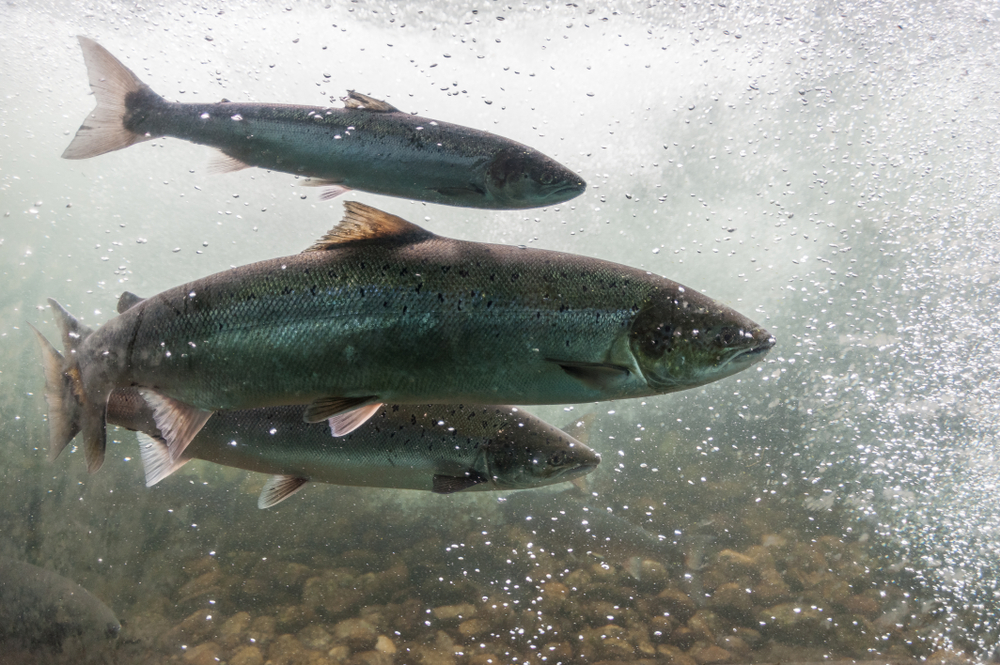
Aquaculture
Halamid® has been a trusted and effective disinfectant in aquaculture for many years, valued for its proven efficacy and low toxicity to fish, shrimp, and aquatic environments. It is suitable for use in saltwater, brackish, and freshwater conditions.
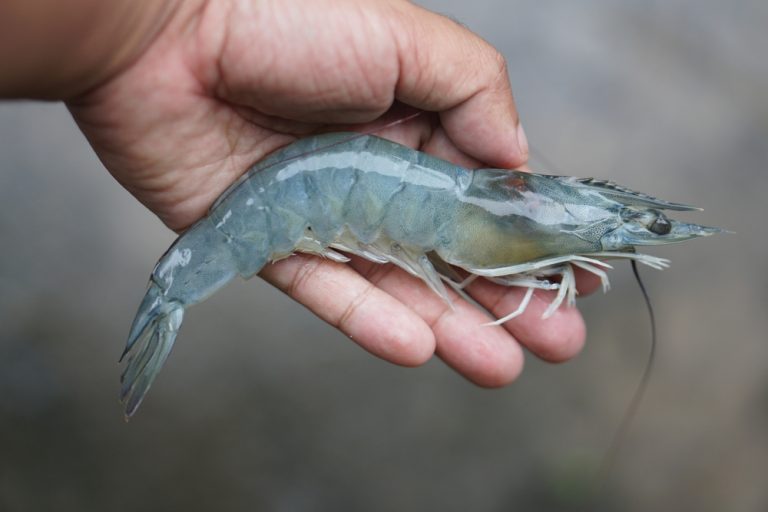
Shrimp Farming
In shrimp ponds and culture systems, HALAMID® is applied directly to the water for both routine hygiene management and disease outbreak control. It is effective against major shrimp pathogens such as Vibrio species, White Spot Syndrome Virus, and other bacterial and viral challenges.

Poultry
Biosecurity is key in farms and veterinary hygiene, all along the ‘farm to fork’ chain and starts by effective disinfection. Halamid® has been developed from the starting point of a strong killing effect and by greatly improving aspects such as stability is solution, corrosiveness and safety compared to more hazardous products.

Livestock
Halamid® is proven powerful yet mild disinfectant ideally suited to be used by poultry farmers in broiler houses, hatcheries and layer farms. Halamid® is notified under the EU BPR regulation and UK DEFRA approved among many other registrations around the world.

Healthcare & Industry
Halamid® is a broad-spectrum disinfectant effective against all major microorganisms. Widely used in food processing, drinking water systems, hospitals, and industrial facilities, it combines strong antimicrobial performance with excellent material compatibility. Easy to dissolve in water and gentle on surfaces, metals, and plastics, Halamid® meets the highest hygiene standards across diverse applications.
Everything you need to know about Axcentive
A great reputation by making a positive impact
It is less than three years ago that Axcentive decided to join Ecovadis – a global partnership offering companies a structural benchmark approach to corporate social and environmental activities. In the meantime we are proud to have received the Gold Medal Award. With confidence I can state that our team has become addicted to the creative strive towards a positive environmental and social impact. We continue to reduce our electricity consumption, despite increases in staff. Our paper consumption continues to go down thanks to more and more electronic processes. Soon our solar power generation should start up; other staff initiatives reduce our waste such as our re-useable lunch boxes or even small initiatives such as the re-use of waste by improving the soil with used coffee grounds. We turn our consumption to more ‘bio’ by buying fresh bio produce locally.
Going beyond our own impact, we continuously try to get our suppliers addicted to this same energy boost. Some are in an advanced stage such as our road transporter DSV who is extensively reporting on continuous improvements in CO2 emissions with their trucks.
For sea shipments the choices are still limited. Several sector initiatives are ongoing (e.g. alternative fuels, slow steaming) but for a company such as ours, the transport chain is long and it is still difficult to actually favour the lower impact option.
Our manufacturers are making a real impact, though coming from far. Boosted by ever more stringent limits on air, liquid and solid waste and directives on safe and healthier working conditions, significant investments – some of several millions of Euros – are made by those that have the resources. Others are forced to close down.
One example shows a moderate size factory having reduced its SO2 and NOx emissions to less than 25 % of the reference. Another site even reached 40 % less gas emissions. Yet another plant has re-vamped its biological waste water treatment installation, allowing to send the sufficiently clean water to the municipal waste water treatment installation for final treatment. Sometimes it is about installing a warning system when emissions are exceeding a limit in order to react quickly.
Over the past few years we have significantly concentrated our purchases with those manufacturers that fully comply with our Code of Conduct and that have active policies on Health and Safety, Environmental and Sustainable Supplies.
Axcentive is performing regular supplier audits on environmental measures taken. Also we ask difficult questions about health, safety and ethical issues such as bribery. We are extremely happy to see the willingness of our suppliers to cooperate with this. Even if for some of them this topic is relatively new. Our suppliers worldwide recognise the importance of awareness and reporting on CSR topics.
“For 2020 Axcentive is committed to have a significant positive impact. You – our suppliers – play a crucial role here. Creative improvements on all aspects under your control are possible and needed. If necessary Axcentive will insist on such further measures and ask a reasonable effort in relation to waste emissions, working conditions or ethical behaviour. Our concerted efforts will reflect on the reputation of our companies (and our people!) and the positive impact they make in this world.”


Welcome to St David’s Poultry Team in our HALAMID ® distribution network for Poultry and Farming livestock
St David’s Poultry Team has been recently appointed as Halamid® distributor for the livestock market in United Kingdom and Ireland.
St David’s Poultry Team is present in the Poultry, Equine and Farming market since 1997 actively selling their product through Veterinaries and an online shop Is UK’s and Ireland leading poultry
veterinary practice, with 14 locations providing customized expertise and worldwide consultancy.
Richard Turner, managing director of St David’s Poultry welcomes Halamid® in their product range as it’s a product already know for its use and effectiveness.
In UK and Ireland Halamid is duly registered and ready to be supplied to our farmers, users and vets For more information please contact Richard Turner via email info@stdavidspoultryteam.co.uk or via phone 01392 872932 to St David’s Poultry Team or directly Axcentive’s office.

Controlling new pathogens before they become a threat
New pathogens are discovered every day. Disinfectants equipped to eradicate the microbial threats of today and tomorrow are crucial for fish health—and farm economics.
Every autumn, a new anti-influenza injection is available. But nobody knows how effective each year’s vaccine will be. While people get flu shots to stay protected from the flu, engineering the injection is a gamble for experts in the field every year. After all, it’s impossible to know which type and strain of influenza will be dominant each year. All too often, flu season is dominated by a new strain that hasn’t been discovered.
Whenever new pathogens are discovered, experts face a similar set of challenges. For example, Canadian researchers recently identified three new viruses that are affecting both wild and farmed salmon in the North Pacific. It remains to be seen what impact these viruses are having on the environment. But pundits believe that these still unknown types of arena, nido and reo viruses may play a role in the ever-reducing wild populations of Chinook and sockeye salmon. If that’s the case, the viruses not only have a tremendous impact on the fish themselves, but also the various stakeholders involved in the ecosystem—like people who make a living from fishing, sports anglers, hatcheries, and more.
The fact that researchers are discovering new viruses—those that are possibly endemic—is not surprising given the powerful detection techniques developed in recent years—such as DNA sequencing. What’s important for the aquaculture industry, though, is to make sure that farmers have no role in the proliferation of these pathogenic viruses. In that respect, it is a bit questionable that one of the viruses has been identified exclusively at salmon hatcheries—and not in the wild.
When it concerns such an intensive method of growing animals, we should build shields that protect fish both inside and outside from infections and other harm. The industry does not want to be responsible for the release of pathogens that originate from farm environments—the same way that it doesn’t want to import endemic pathogens from the wild that may lead to serious welfare conditions and economic losses at farms.
This is, of course, easier said than done. The shield mentioned earlier is our standard operating procedure that includes intensive analytical efforts to know what is coming in and going out of our farms. Biosecurity is an essential—if not the most essential—theme in this.
With the right procedures and the right products in place, all pathogens—whether they are known or haven’t been discovered yet—aren’t an issue to any farm. They are not in any effluents, either.
One of the key ingredients in a safe farm is Halamid® , a powerful biocide that is effective against the broadest possible range of viruses (as well as bacteria and fungi). At the same time, Halamid® is still mild enough to be handled by any operator. Halamid® already eradicates the new viruses mentioned above and—thanks to its formula—is well placed to eradicate all of the new viruses that researchers discover over the next 10 years.
And that’s a comforting thought for anyone interested in protecting fish life and keeping farms free of pathogens.
To learn more about the transformative nature of Halamid® , check this out.
A comforting thought.
Halamid®: A disinfectant that drastically reduces corrosion
Corrosion is a significant problem in industries where disinfection processes are frequent and of critical importance.
According to Sarah Koehler—a commercial manager at France’s Axcentive Group, producers of the popular biocide Halamid®—using too many peroxygen-based disinfectants can corrode, tarnish and degrade pumps, pipes, cages, grills and other pieces of equipment that are essential for modern fish farms and poultry barns.
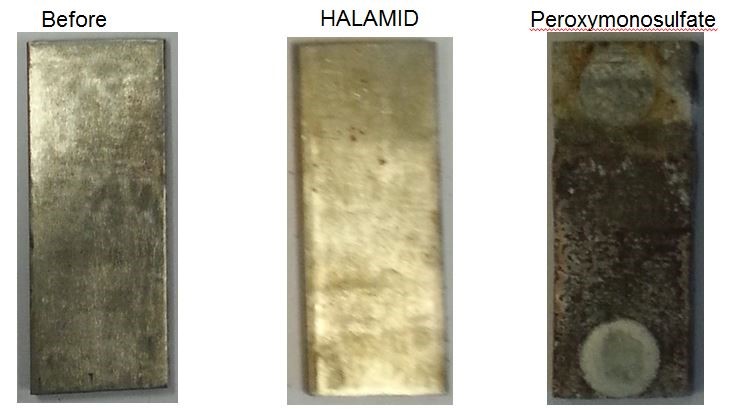
As such, it should come as no surprise that many disinfecting solutions have undergone corrosion tests. These include Halamid®, which recently went head-to-head against a peroxymonosulfate-based product, using ASTM norm 1384 as the basis for the experiment.
This approach enabled researchers to test the corrosiveness of liquid (in this case, a 1% solution of Halamid®) by checking various substrates at the same time. To ensure accurate results, the two disinfectant solutions were changed daily. During the test, six different materials—copper, brass, steel, stainless steel, aluminium, and PP—underwent the same number of cycles in the disinfectant solution in an open, aerated refluxing vessel.
The results of the experiment speak for themselves. Weight loss measurements provided quantitative proof that Halamid® is less corrosive to metals than the peroxymonosulfate-based product that was tested.

These findings confirm that—when compared to substrates—the neutral pH of Halamid® and its mild oxidative properties have a limited impact on metals used in modern poultry- and aquaculture.
While it’s true that all disinfectants all have different benefits and drawbacks, Axcentive is optimistic that these results will help both aquaculturists and poultry farmers make an informed decision when choosing which disinfectant to use in environments where corrosion remains a pervasive problem.
For more information about Halamid®, please visit www.axcentive.com. You can also email info@axcentive.com or call our sales office at +33 442 694 090.
There are good and better disinfectants
The first lesson in Marketing is to respect your competitor. All suppliers of disinfectants are trying their best to deliver a product that is at least meeting the customer’s requirements and if possible exceeding it, certainly in terms of killing microorganisms. It is useful though to underline in understandable terms the differences between disinfectants currently on the market, so that each customer can make his own decision.
In terms of oxidative disinfectants, generally recognised as the most powerful ones, Halamid® is often compared to peroxymonosulfate (PMS) based formulations. Our re-sellers frequently come across farm managers that want to see a real test in their own farm. Recently a Greek poultry farm showed us their results. At half the concentration (1%), Halamid® gave significantly lower total microbial counts and lower enterobacteria levels, than the competitive (PMS-based) product used at 2%.
Based on our first marketing lesson, we tried to understand where the difference in performance could be originating from. Some differences:
• Halamid® at the recommended dilution has a neutral pH whereas PMS based products are acidic. Though the low pH of PMS would ultimately show corrosion of metal parts, this should not directly interfere with the killing effect.
• In solution Halamid® is stable for a long time. A stock solution can thus safely be prepared. Virtually all other oxidative disinfectants, including PMS-based products break down in a matter of days, one week maximum. Could this explain the result?
• Halamid® is killing microorganisms for a longer time and at lower speed than a PMS based product. This has both advantages and disadvantages. Halamid® needs a certain contact time to reach its full killing potential. However this characteristic also means it is more selective and not immediately neutralised by organic matter, in contrast to PMS based products.
Arno Schut, Technical Manager at the Axcentive Group lifts the doubt: Further studies made us believe that the real difference in performance between these two products should be found in the presence of organic matter (residual dirt). With the lower endurance of PMS in the presence of organic matter, one should use a much higher concentration to compensate for all the PMS lost in reactions with organic matter. Halamid® has the capability to penetrate into the dirt and selectively kill the microorganisms that are often found in or under such dirty patches.
Therefore the conclusion of this test is that under ideal and clean circumstances all disinfectants are good. In real life however the better ones (such as for example Halamid®) stand out.

Halamid® designed for use with biofilters
Recirculation systems equipped with biofilters are of growing importance for the aquaculture industry, either for environmental reasons, or to limit the risk of pathogen introduction into the farm. Such closed circuits are equipped with among others, biofilters to keep water clean.
With fish, ammonia and urea are the main nitrogenous excretion products. As these substances can be toxic to fish in higher concentrations, they should be removed. Biofilters contain bacteria (primarily Nitrosomonas and Nitrospira) that convert ammonia into nitrates. This is the critical step. Subsequently nitrates are removed by denitrifying bacteria. This process is analogous to what happens in nature, but due to the higher stocking densities in an aquaculture farm and consequently the higher production of nitrogenous substances, the same effect can only be achieved by a high concentration of these useful bacteria, such as in a biofilter.
Halamid® is used for water treatment during the production cycle and therefore in the presence of aquatic animals and with an operating biofilter.
The question that easily comes up is: “will Halamid® affect the useful bacteria in the biofilter?”.
Several studies have concluded that Halamid® – at recommended dosage – is compatible with the useful bacteria in biofilters and causes no detrimental effect to their functioning. Notably Boardman et al (2009) * showed in a series of controlled tests that a bio filter’s activity (measured by the rate of nitrate formation) at 20ppm Halamid® in the recirculated water, does not affect the nitrification process.
The study above can be considered a worst-case set-up. After all, in most farms, as is our recommendation, treatment with Halamid® is done in one tank at a time, so that the effluent from this tank is quickly diluted with the effluent from other, non-treated tanks causing a strong reduction of the active substance concentration in the water, before it reaches the biofilter.
Finally, a point of attention. A bio filter offers conditions that favour the proliferation of useful bacteria. However, it does the same for pathogenic bacteria that may harbour in the biofilter as well. In case a farm operating a recirculation system experiences continued presence of elevated levels of pathogenic bacteria, then the biofilter may need treatment with a disinfectant. This will destroy all bacteria in the biofilter and thus should be a last resort. Halamid® can also be used for this, albeit at higher, typical disinfectant concentrations, with excellent results.
Greek broilers rely on Halamid® to remain healthy
Every broiler farm is different and that is exactly why it makes sense to continue testing a commercial disinfectant thoroughly under real life conditions before applying it on the farm. Results from efficacy testing under lab conditions do discriminate between good and bad disinfectants and therefore we are all looking forward to harmonised European testing standards. However, to conclude on which product is amongst the best for a given farm, on-the-spot farm testing is essential.
A field trial done in a Greek broiler farm underlines this. The farm, not far away from Athens, made two poultry houses available. The two adjacent empty buildings of approximately equal size and construction were cleaned in the same way. A disinfection by spraying was performed using a 2 % solution of a peroxygen compound in one house and a 1 % solution of Halamid® in the other. Swabs were taken by an external lab and checked for Enterobacteria, TBC and Salmonella.
The results showed that the 1 % Halamid® solution performed better than the 2% solution of the peroxygen formulation. Particularly on Enterobacteria a striking difference was seen and TBC values for the ‘Halamid’ building were better as well.
Mr. Orestis Zisidis, Technical Director of Food & Farm Solutions, distributor for Halamid® in Greece comments:
“The laboratory results (red: Vet Analysis Lab, Athens), confirmed that the difference was real. The other product, well-known in the Greek market, had high numbers in Enterobacteria and TBC. I have to admit that the cleaning of the two buildings could have been done better, but this is the reality in most cases and under these conditions, Halamid® performs better than the peroxygen compound.”
Indeed not only the choice of disinfectant but also cleaning is often a critical point. Halamid®, because its killing effect is better dosed, remains active in the presence of dirt for a longer time and this allows for a more effective killing of micro organism.
This milder though powerful mode of action also explains that a Halamid® solution is less corrosive, is less dangerous for the aquatic environment and that it has a lower risk profile for the operator.
Halamid® In every aspect a reliable disinfectant.
Chicken Health: Drink-good is Feel-good
Chicken, irrespective of age, drink approximately half their own weight in water per day !
Obviously the quality of all that water is crucial in keeping your flock fit. Nevertheless in reality, the bacteriological quality is often problematic due to insufficient attention to the water system as a whole from its source to the drinkers and to water sanitation in particular. In fact water quality standards are lacking for most of livestock farming whereas they exist for humans. Intensively raised animals – in contrast to their wild counterparts – require high drinking water standards, just like human civilisation made us very sensitive to water quality for our health.
Apart from physicochemical properties of drinking water, such as pH, hardness, metals and other electrolytes, the bacteriological quality of water is to be controlled frequently. The complete set up of the water system should be well thought over to avoid most of the contamination problems. Water treatment cannot overcome a badly configured system that allows for continuous contamination. Starting with a sound hardware and physicochemical set up, treatment chemicals can stabilise water quality to the optimum and safe level. Bear in mind that all parameters interact. For example a high pH may cause a reduced effect of certain disinfectants. Also consider withdrawing disinfectants dosage when administering medication.
For water sanitation often relatively simple chemicals are still being used. Hypochlorite and Hydrogen peroxide are two examples. Though effective under optimal physicochemical circumstances, these show large interferences with changing water quality leading to insufficient bacteria control and damage to the equipment due to corrosion.
Halamid® is an excellent compromise between effective pathogen control and flexibility vis-à-vis (fluctuating) water quality. Based on active chlorine, Halamid® is reliable for broad spectrum disinfection. The difference with hypochlorite or for example NaDCC is that its active chlorine is sufficiently strongly bound to stabilise and protect its activity from changing water qualities. Hence it provides under all circumstances a reliable water quality (and a chlorine residual) at the end of the line. The concentration used for killing, for example, all faecal germs possibly present in drinking water are not harmful to chicken nor does it reduce the drinking appetite.
Halamid® is easily dosed, stable in solution for several months (practical when making a stock solution) and stored in its original packing without loss of activity.
Do contact us, or your nearest distributor, if this raises questions, or in case you want to give it a try with Halamid® in your water treatment system.
Visit www.halamid.nl
Axcentive’s exclusive distributor for Halamid® in The Netherlands – the company VEIP – has under license and in cooperation with us launched the Dutch Halamid® web site on halamid.nl. This site was designed with the demands of the Dutch users in mind while promoting our disinfectant in the Dutch speaking areas.
Axcentive’s exclusieve distributeur voor Halamid®, VEIP heeft onder licentie en in samenwerking met ons de Nederlandse Halamid® website gelanceerd op halamid.nl. Deze site is ontworpen met de Nederlandse gebruikers in gedachten en zal nog beter in staat zijn onze bestaande en potentiele Nederlandstalige klanten te bereiken.
Axcentive is present at VIV Asia 2019
Check out Halamid® : Our powerful disinfectant for Livestock and Aquaculture.
The difference with all other water treatment products in Aquaculture is this combination of great efficacy and low toxicity to fish and shrimp. Discover the effective way to keep your Poultry flock healthy using aerial disinfection during the rearing stage. Try out our innovative disinfectant to prevent diseases by treating drinking water with no effect on taste. Talk to us for more information.

Come and meet us to discuss your projects at VIV Asia 2019 in BITEC, Bangkok, Thailand from 13-15 March 2019. Hall 106, Booth 250.
We look forward to seeing you!

Contact us
Ready to explore partnership opportunities?
Discover how our 190 years of chemical expertise and unique product portfolio can support your business growth.